Sniper Strike FPS 3D Shooting
Mobile Gaming Studios Ltd.Action
4.819.43K Reviews
- Version
- 500251
- Installs
- 50.00M
- Age Rating
- Teen
Screenshots
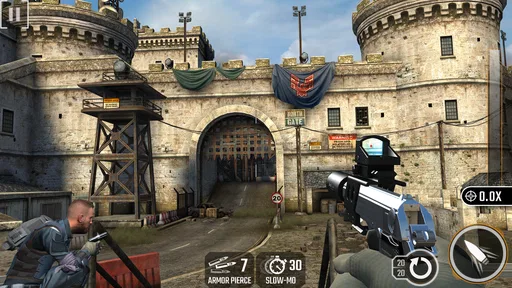
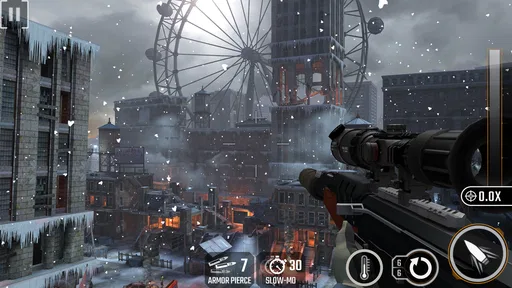
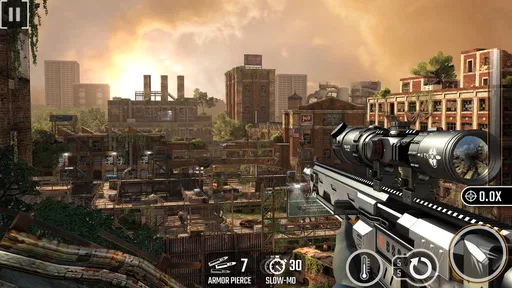
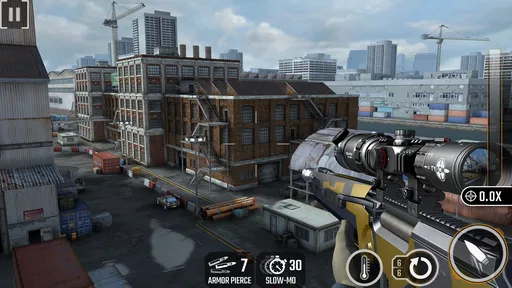
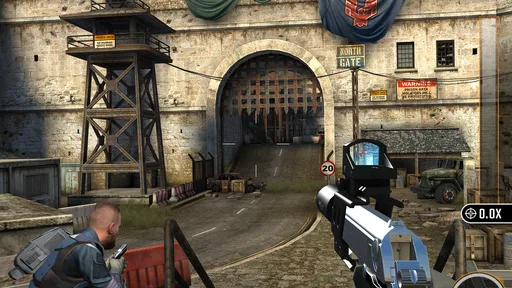
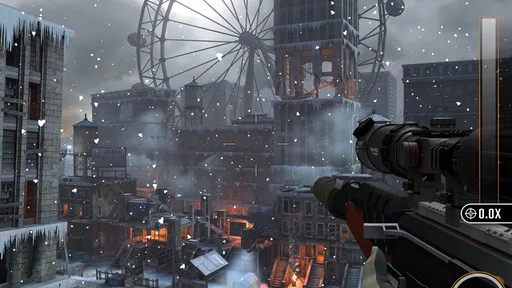
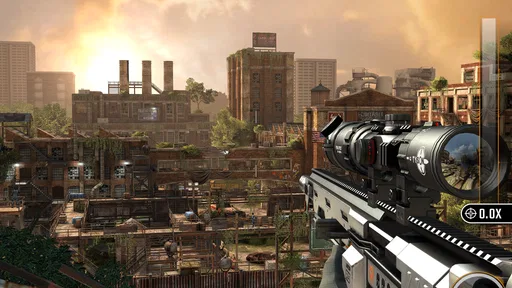
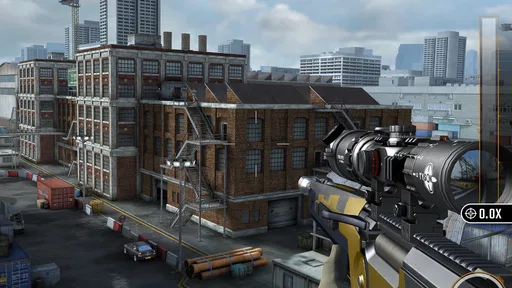
Our Review of Sniper Strike FPS 3D Shooting
 Analysis by Appyee
I spent time with Sniper Strike FPS 3D Shooting as a pick-up-and-play action game, and its defining appeal became clear quickly: it turns the familiar sniper viewpoint into a short, focused shooting challenge. Instead of asking me to learn a huge open world or manage a complicated loadout, it puts attention on lining up a shot, reading the situation, and deciding when to fire. That narrow focus is also the reason it feels easy to start but not always easy to enjoy for long sessions.
The game comes from Mobile Gaming Studios Ltd. and is free to download, which makes it simple to try without committing money first. Its Teen content rating is worth keeping in mind for families, particularly because this is built around armed combat rather than harmless target practice. The game has been available since November 27, 2017, and its current version is 500251. It runs on Android 7.1 or later, so many older compatible devices can still be considered.
Why the sniper viewpoint matters more than the action label
Many mobile action games try to create excitement through constant movement, crowded arenas, or a long list of weapons. This one takes a different route. The central capability is the ability to focus on a distant target through a sniper-style view and make the shot itself the main event. In my experience, that changes the rhythm completely: I spend less time rushing and more time watching, positioning my aim, and choosing whether a quick shot is worth the risk.
That sounds simple, but the viewpoint gives each encounter a small decision-making layer. I am not merely tapping wherever an enemy appears. I have to control the reticle, avoid overcorrecting, and wait for a useful opening. The best moments come when I resist the urge to fire immediately and instead let the scene settle. A rushed shot can feel less like a failure of reflexes and more like a failure of judgment, which gives the game a little more personality than a basic tap-to-shoot experience.
The important strength is concentration, not complexity. Sniper Strike works best when I treat every scene as a compact observation exercise. The game does not need to overwhelm me with systems to make a shot feel satisfying. Its appeal comes from narrowing my attention to one task and giving that task a clear result.
The store presents it as a 3D sniper game, and that description is accurate without explaining the practical difference. The three-dimensional presentation helps create distance and perspective, while the first-person framing keeps the action personal. I feel close to the aiming process even when the target is visually far away. That contrast makes the game more involving than a flat shooting gallery, although it also means that small aiming mistakes are more noticeable.
How aiming feels during ordinary play
On a phone, precision depends heavily on how comfortable I am holding the device. I found it easier to play in short sessions with both hands, keeping one hand steady while using the other for the aiming input. Playing one-handed is possible in casual circumstances, such as waiting for an appointment, but it makes fine adjustments less comfortable and increases the chance of an accidental movement.
My most useful habit was to make smaller movements than I initially thought necessary. Large swipes can carry the reticle past the target, especially when I am trying to react quickly. A gentler adjustment gives me more time to confirm the shot. This is a small technique, but it changes the experience: the game begins to reward controlled movement rather than frantic tapping.
I also learned not to judge the game after only a few attempts. The first sessions can feel slightly awkward because the player is adapting to mobile aiming rather than simply pressing an attack button. Once that adjustment happens, the central loop becomes clearer. I start thinking about the next shot before making the current one, which is where the game feels most deliberate.
For readers wondering whether it requires a powerful modern phone, the listed minimum is Android 7.1. That broad compatibility is convenient, though actual comfort can still depend on the device’s screen, touch response, and general performance. A phone that technically runs the game may not provide the same aiming feel as a newer handset. I would test it on the intended device before assuming that every older phone will feel equally responsive.
A practical routine that improves the experience
I recommend beginning with a short warm-up rather than immediately trying to play for a long stretch. A few minutes of calm aiming helps me settle into the sensitivity of the controls. After that, I focus on consistency: keep the reticle near the likely target area, make one controlled correction, and fire only when the shot looks dependable.
Another useful approach is to separate observation from action. I first scan the scene, then decide where my attention should stay, and only afterward move into precise aiming. This prevents the common mistake of moving the reticle constantly while searching. Constant movement feels active, but it usually makes the final shot less stable.
When I play during a short break, I avoid treating every attempt as a test of speed. The game is more enjoyable when I use those minutes to practice patience. That makes it a better fit for brief, focused sessions than for background play while watching something else. If my attention is divided, the main capability loses its value.
The best everyday situation for this game
The strongest use case is a short pause when I want something more involving than a puzzle but less demanding than a long role-playing session. I can open it, concentrate on a few encounters, and stop without needing to remember a large story or reconstruct a complicated strategy. That makes it suitable for a commute break, a wait between tasks, or the final few minutes before putting the phone away.
I especially liked it when I wanted action without the pressure of a competitive multiplayer match. There is a different kind of relaxation in focusing on a contained shooting challenge rather than worrying about an opponent’s unpredictable decisions. The game still asks for attention, but the attention is directed toward the shot rather than toward a constantly changing social match.
It can also suit someone who enjoys improving through repetition. The basic action is accessible, but controlled aiming gives room to become more consistent. I found that the satisfaction came less from discovering a complicated strategy and more from reducing careless mistakes. That is a modest form of progression, but it can be effective for players who like practicing one skill.
On the other hand, I would not choose it as my main action game if I wanted exploration, a deep narrative, broad character customization, or a large competitive community experience. Its focused viewpoint is the attraction, but it is also a boundary. Players who need constant variety may find the central loop too narrow once the initial novelty fades.
Where it stands beside other mobile shooters
Compared with a traditional arcade shooter, this game feels slower and more selective. Arcade alternatives usually reward rapid movement and repeated attacks, while Sniper Strike places more weight on the moment before the shot. I prefer this approach when I want a calmer pace and a clearer sense of individual accuracy. I prefer an arcade-style game when I want immediate noise, speed, and constant action.
It also differs from large multiplayer shooters. Those games often demand map knowledge, fast reactions, equipment decisions, and awareness of several opponents at once. Here, the mental workload is more concentrated. That makes it easier to understand, but it also means there is less room for teamwork or unpredictable player behavior. Someone searching for an esports-like challenge should look elsewhere; someone wanting a compact solo shooting routine may find this more approachable.
Compared with a realistic military simulator, the game is easier to pick up. I do not approach it as a detailed training tool or a simulation of real marksmanship. Its value is entertainment built around the visual and emotional idea of taking a careful long-range shot. That distinction matters because players expecting highly realistic ballistics or extensive tactical planning may feel that the experience is too streamlined.
The tradeoffs behind the free entry point
Being free makes the game easy to sample, but it does not automatically make it the best value for every player. In-app purchases range from $0.99 to $99.99 per item, so I would approach optional spending carefully. The broad range means the game can remain accessible to someone who never buys anything, while also presenting purchase choices that may feel significant to a player who becomes deeply invested.
My advice is to decide in advance whether I am treating the game as a free short-session title or as a hobby worth spending on. That simple distinction prevents impulse decisions during a frustrating moment. If I am only using it occasionally, the free entry point is the main advantage. If I am playing frequently, I should consider whether a purchase genuinely improves my enjoyment or merely reduces a temporary obstacle.
The free-to-play structure can also affect the rhythm of a session. Even when the shooting itself is enjoyable, interruptions or pressure to consider purchases can make the experience feel less direct than a paid game. This is the main friction I would mention to a friend before recommending it. The aiming concept is focused, but the surrounding mobile-game economy can make the overall experience feel less pure than a one-time purchase.
Another tradeoff is repetition. The narrow sniper focus gives the game its identity, yet that same focus can make longer sessions feel similar. I get the most from it when I stop while the aiming loop still feels satisfying. Playing beyond that point can turn a precise activity into routine tapping. Short sessions are not merely convenient here; they help preserve the feature that makes the game appealing.
Who benefits most from the focused design
I would recommend it first to players who enjoy mobile action games built around accuracy, timing, and visual focus. It is a good candidate for someone who likes the idea of a sniper game but does not want to learn an elaborate control scheme. It is also suitable for people who prefer solo play and want a clear activity that can be understood almost immediately.
It may appeal to a player moving from simple target games toward something with a stronger 3D presentation. The added perspective makes aiming feel more involved, while the basic goal remains easy to grasp. That combination is useful for casual players who want a little more tension without committing to a full-scale shooter.
The audience size suggests that this style has broad appeal: the game has passed 50 million installs, carries a 4.8 average from around 879 thousand ratings, and has about 19 thousand written reviews. Those figures do not replace personal testing, but they do show that the focused shooting format has connected with a large mobile audience. I would still interpret the popularity carefully, because a widely downloaded game can serve casual players and dedicated players very differently.
The Teen rating also affects who I would recommend it to. I would not present it as a family-friendly game for young children simply because the controls are easy. The subject is combat, and parents should make the decision with that context in mind. For teenagers and adults who are comfortable with action violence, the rating is less likely to be a concern.
I would tell competitive shooter fans to keep their expectations measured. The game can sharpen patience and aiming habits in a limited sense, but it is not a replacement for a multiplayer shooter with team roles, live opponents, or broad tactical systems. Likewise, players who dislike free-to-play purchase structures may be happier with a paid alternative that offers a more predictable session.
Small choices that make each session better
My first practical tip is to play when I can give the screen my full attention. Because the main capability depends on precision, background distractions have a larger effect than they would in a button-mashing action game. Even a short uninterrupted session feels better than a longer session interrupted by messages or conversation.
Second, I keep the phone stable before making a fine adjustment. Resting my hands lightly or using a comfortable two-handed grip reduces unnecessary movement. This is especially helpful on smaller screens, where a tiny physical shift can become a large aiming correction.
Third, I treat missed shots as feedback about control rather than a reason to rush. If I repeatedly pass the target, I slow down. If I am consistently late, I prepare the reticle earlier. This turns repetition into a practical learning loop and keeps the game from becoming a series of random taps.
Finally, I use the free version as a trial of the core loop before thinking about purchases. I want to know whether the aiming itself remains enjoyable after the first impression. If it does, spending may be easier to evaluate honestly. If it does not, an item purchase is unlikely to solve the underlying mismatch between the game and my preferences.
My recommendation after playing
Sniper Strike FPS 3D Shooting succeeds because it commits to one clear idea: a mobile action game where the shot, not constant movement, receives the attention. I enjoyed it most when I played patiently, used short sessions, and treated accuracy as the challenge. The 3D sniper viewpoint gives ordinary tapping more tension, and the low barrier to entry makes it easy to see whether that style suits me.
Its limitations are equally clear. The focused loop may become repetitive, free-to-play purchases can complicate the otherwise simple design, and it does not offer the breadth of a major multiplayer shooter or the depth of a tactical simulator. Those are not minor details; they determine whether the game feels like a good fit after the first few sessions.
For me, it is worth trying as a free action game when I want a compact, solo shooting experience built around concentration. I would recommend it to a friend who enjoys careful aiming and quick breaks, while warning a friend seeking exploration, teamwork, or highly realistic gunplay to choose a different category of shooter. With that expectation in place, the game’s central capability feels focused rather than limited, and that is where its strongest value lies.
Verdict
Strengths of Sniper Strike FPS 3D Shooting
- Responsive touch controls make aiming and movement easy to learn.
- Short missions fit well into quick gaming sessions.
- Multiple weapons offer variety in combat approaches.
- Enemy encounters become more challenging as missions progress.
- Works well for players who enjoy focused shooting gameplay.
Limitations of Sniper Strike FPS 3D Shooting
- Some missions can feel repetitive after extended play.
- Upgrade costs may encourage frequent grinding between stages.
- The aiming system can feel restrictive in certain scenarios.
- Difficulty spikes may make later levels frustrating.
- Ads or optional purchases can interrupt the overall experience.
Other Releases by Mobile Gaming Studios Ltd.
View All
War Sniper: FPS Shooting Game
Action4.8

War Drone: 3D Shooting Games
Action4.8
Similar Picks in This Category
View All
Temple Run 2: Endless Escape
Imangi Studios4.1

PUBG MOBILE
Level Infinite4.3

Free Fire: 9th Anniversary
GARENA INTERNATIONAL I4.4

Talking Tom: Hero Dash Run
Outfit7 Limited4.3

slither.io
Lowtech Studios3.9

Sniper 3D:Gun Shooting Games
Wildlife Studios4.6
Frequently Asked Questions
What is Sniper Strike FPS 3D Shooting?
Sniper Strike FPS 3D Shooting is a mobile first-person shooting game focused on long-range combat, target elimination, and mission-based gameplay. Players take the role of a sniper and complete objectives across different environments, usually by carefully aiming at enemies before they can react. The game combines shooting challenges, weapon upgrades, and short action missions designed for quick sessions.
How does the gameplay work in Sniper Strike FPS 3D Shooting?
Gameplay generally revolves around entering a mission, scanning the area, identifying targets, and using a scoped rifle to make accurate shots. Timing, precision, and awareness are important because enemies may move, hide, or attack nearby characters. As missions become more difficult, players may need to improve their equipment, manage ammunition, and choose the best moment to fire.
Does Sniper Strike FPS 3D Shooting require an internet connection?
The connection requirements can depend on the specific version and features available on your device. Basic missions may be playable offline in some versions, while advertisements, rewards, cloud progress, events, or other online services may require an internet connection. It is recommended to launch the game once while connected and check which features remain available without Wi-Fi or mobile data.
Is Sniper Strike FPS 3D Shooting free to download and play?
The game is typically available as a free download, allowing players to try its main shooting missions without paying upfront. However, free-to-play games commonly include optional in-app purchases, advertisements, premium currency, weapon upgrades, or other convenience features. Before downloading, review the store listing and your device’s purchase settings, especially if children may access the game.
Is Sniper Strike FPS 3D Shooting suitable for all players?
Sniper Strike FPS 3D Shooting is intended for players who enjoy action games, first-person shooting, and realistic target-based combat. Because it includes firearms, enemy attacks, and shooting-related themes, it may not be appropriate for young children or users who prefer non-violent games. Parents should check the official age rating, content descriptions, advertising, and purchase options before installation.
Play our best games!


